
THE LANCE
April 20, 2013
Little else evokes Detroit’s status as the Motor City than the annual Woodward Dream Cruise showcasing classic cars down America’s first highway.
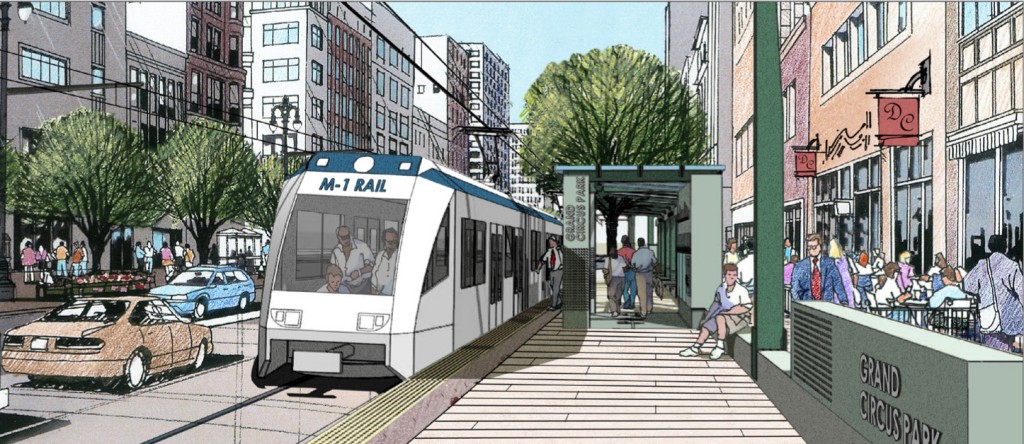
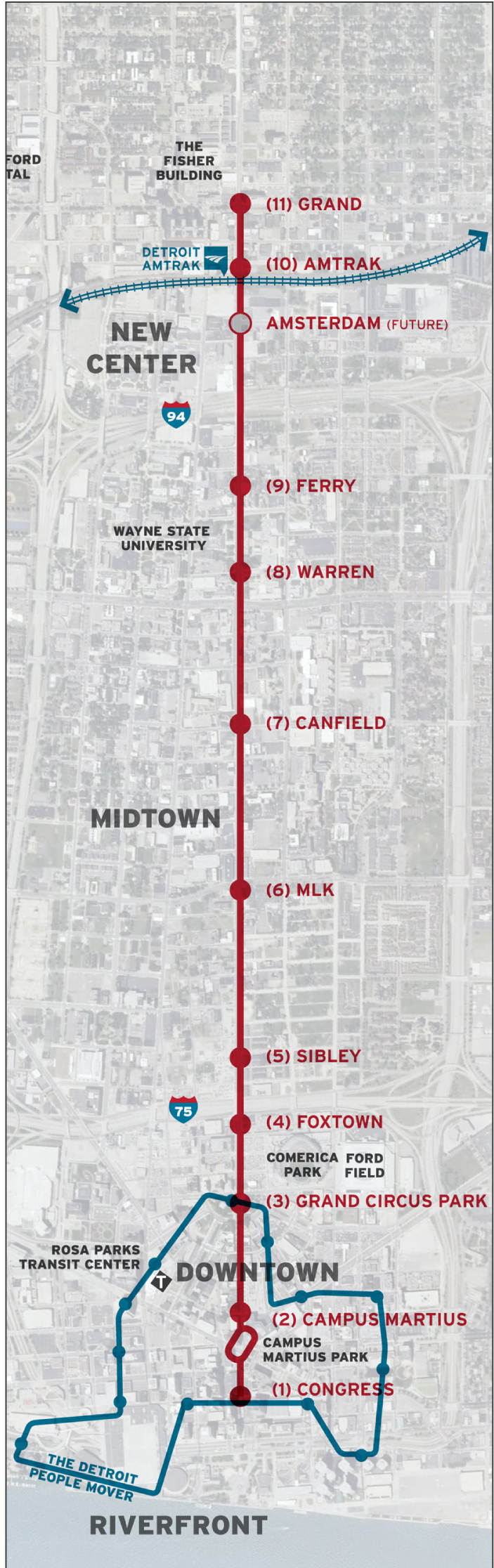
In just over two year’s time, cars on the same road will be making room for a 3.3-mile, 11-station light rail train system reaching from the heart of downtown Detroit south along Woodward Avenue.
Not unlike the streetcars that traversed through Windsor decades ago, M-1 Rail will provide easy, affordable access to downtown and midtown’s best offerings.
James Canning, media consultant for M-1 Rail, said there are 7,000 residents and 140,000 jobs along the corridor, as well as shopping, restaurants and attractions such as Comerica Park, Ford Field, Hart Plaza, Fox Theatre, Fillmore Theatre, Detroit Institute of Arts, Detroit Symphony, Wayne State University, Detroit Medical Center and Henry Ford Hospital.
Project leaders are currently wrapping up an environmental assessment, and expect to break ground this summer. The Supplemental Environmental Assessment, released in February, includes a potential 12th stop that would serve Henry Ford Hospital and TechTown. Canning estimates the LRT will shuttle between 5,000 and 8,000 riders a day when it’s completed in late 2015.
 The $131-million project is being funded through private and public partnerships including donations from automotive, banking, medical, commercial and academic institutions. In January, the United States Department of Transportation pledged $25 million in federal funding. The LRT will cost $5.1 million annually to operate.
“Beyond the initial $25 million investment, the federal government will match funds provided by donors, up to $60 million, which can be used toward the creation of a regional transit system,” said Sommer Woods, director of Governmental & Community Affairs for M-1 Rail.
The LRT was first conceived in 2007, and at one point was proposed as a 9.3-mile LRT reaching all the way to 8 Mile Road. According to Canning, “That more ambitious plan eventually stalled when it could not meet key ridership, funding and other criteria.”
Despite scaling back initial plans, M-1 is being built with future expansion in mind. When launched, it will integrate with existing transit provided by Detroit Department of Transportation, Suburban Mobility Authority for Regional Transportation, Amtrak and the Detroit People Mover. There are also plans to incorporate the LRT within a proposed bus rapid transit down the 27-mile long stretch of Woodward Avenue from downtown Detroit to downtown Pontiac.
Accessible from the Tunnel Bus, Windsorites can easily commute to work and activities in Detroit, further connecting the cross-border cities.
“Right now, the current forms of transportation connecting Windsor and Detroit (with the exception of personal vehicles) is the Tunnel Bus and other private charter buses that run,” said Woods. “We envision people from Windsor being able to use the existing modes of transportation to bring them into Detroit and then for them to be able to transfer onto the M-1 RAIL to travel along the Woodward corridor.”
M-1 has been met with both excitement and caution over funding concerns, but with federal funding committed, residents and project, officials are confident the project will continue on schedule. The LRT has already spurred urban renewal efforts among businesses along the Woodward Avenue corridor.
M-1 will feature rail stops every seven to eight minutes during peak hours and every 12 to 13 minutes during off-peak hours, with service daily until 10 p.m. One-way tickets will be $1.50, and the accessible streetcars will be outfitted with heating and air conditioning and free Wi-Fi.
Windsorite Sozan Akel goes to Michigan two to three times a month to shop at suburban clothing and grocery stores. She doesn’t frequent Detroit, but says she’d nix her car to use the M-1 if she was going to downtown attractions.
“I think this would be a great option for those who do not drive. A lot of people might love to be able to go to all the [downtown/midtown] places if they had a quicker way around than having to walk from the bus station,” said Akel, adding that parking can be “discouraging.”
“Provided that the cost to ride is reasonable, I can see this being a great option. Also, if someone wants to take the train, as there are none from Windsor to the States, it would be convenient to Tunnel Bus and then take the (Amtrak) train,” Akel added.
According to transit website The Transport Politic, 2013 will see more than $64.3 billion worth of transit expansion projects in the United States. There are 31 U.S. cities and five in Canada― Vancouver, Edmonton, Toronto, Montreal and Ottawa— that will begin or continue construction or start service this year.